



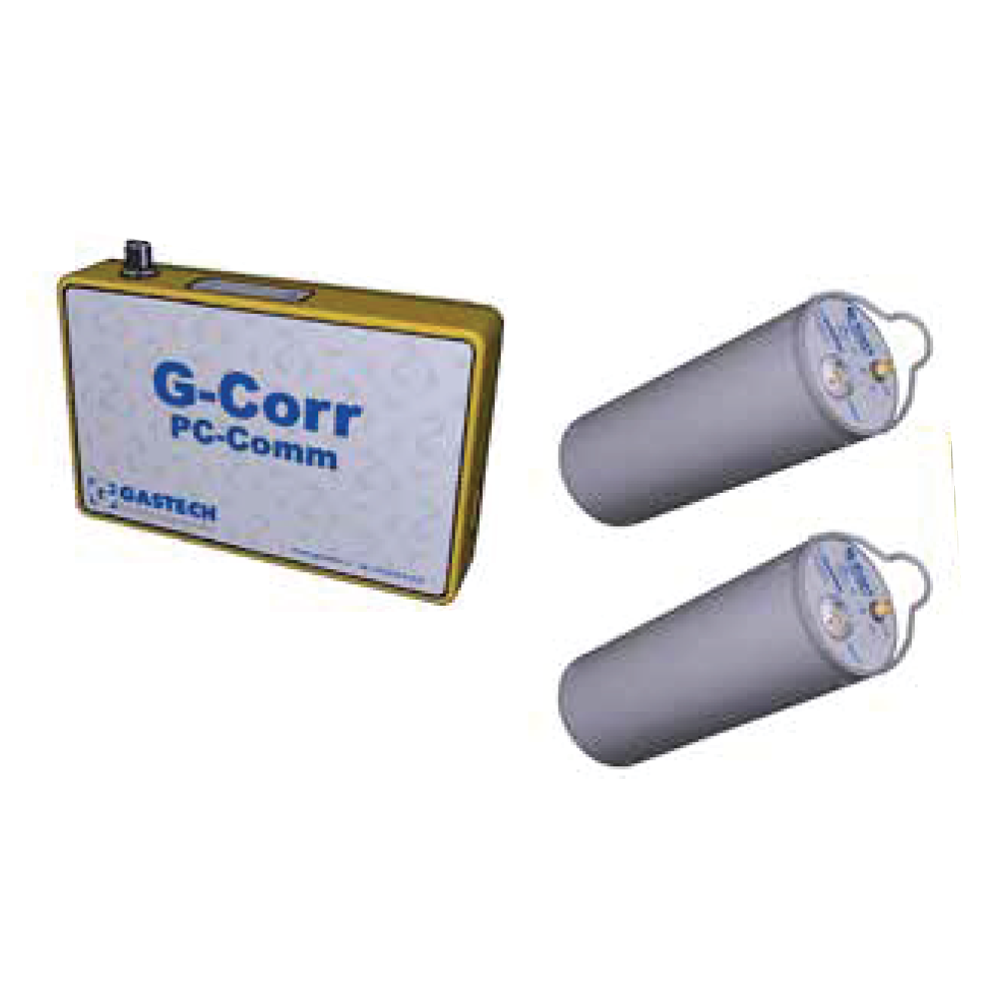
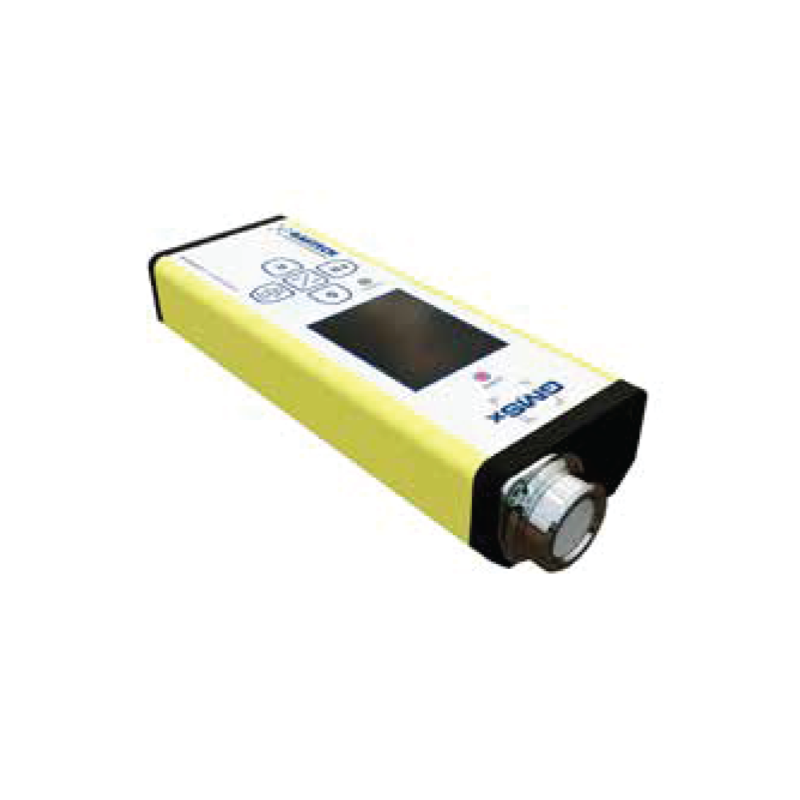
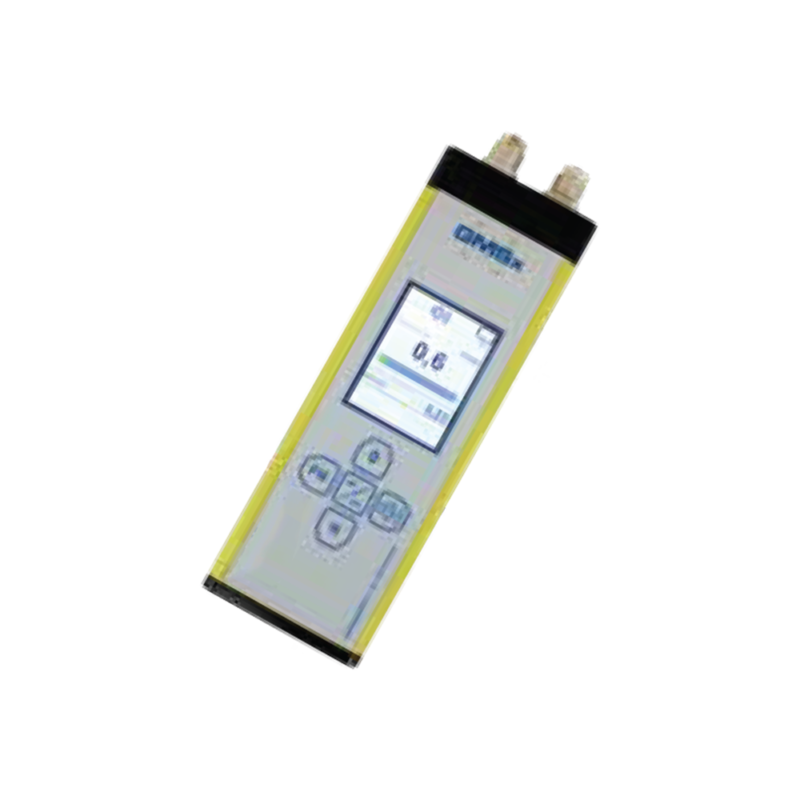
The Gastech G-Corr 4 Plus is a portable FFT (Fast Fourier Transform) water leak noise correlator system consisting of a compact yellow-cased PC-Comm base unit and two wireless cylindrical acoustic sensors, each featuring dual connection ports and a built-in radio transmitter. The sensors are placed in direct contact with the pipe network at two accessible points — valve caps, hydrant couplings, or service connections — on opposite sides of the suspected leak zone. Each sensor records the acoustic noise produced by the pressurized leak and transmits it wirelessly via radio to the PC-Comm processor unit. The FFT processing algorithm cross-correlates the two sensor signals in the frequency domain, calculating the precise time delay between the leak noise arriving at each sensor — and from that delay, computing the exact distance from each sensor to the leak point. The operator inputs pipe material type, pipe diameter, and inter-sensor distance before running the correlation.
The FFT-based processing approach delivers higher resolution correlation results on difficult pipe materials — including PVC, PE, and asbestos cement — compared to standard time-domain correlation methods, because frequency-domain filtering can isolate the specific acoustic signature of the leak from background noise across each frequency band independently. Selective digital filters remove interference from urban ambient sources — traffic, pumps, and ground machinery — that would otherwise distort the correlation output. The PC-Comm designation indicates the system includes PC-based data management and reporting capability, allowing correlation results, pipe data, and location records to be stored and managed in a computer database for asset management and audit trail purposes.
The Gastech G-Corr 4 Plus is deployed by water network operators, leak detection teams, and utility contractors for locating leaks on buried pressurized water distribution pipelines — particularly where the approximate leak zone is already identified through pre-location methods but the exact surface point above the leak must be determined before excavation. It is used across metallic and non-metallic pipe materials on networks of all sizes, from small residential service mains to large-diameter distribution trunks.
Leader Infra supplies this FFT-based water leak noise correlator for water network operators and leak detection contractors — delivering precise buried leak point location on both metallic and non-metallic pipelines through selective frequency-domain cross-correlation and wireless dual-sensor radio transmission.
FAQ — Why does FFT-based correlation outperform standard time-domain methods on plastic and PE pipelines? Acoustic signals travel more slowly and attenuate more rapidly through plastic pipes than through metallic pipes, and the leak noise spectrum shifts to lower frequencies with higher attenuation at higher frequencies. FFT processing analyzes the correlation across individual frequency bands independently, allowing the algorithm to weight the frequency bands that carry usable signal on that specific pipe material while suppressing the heavily attenuated bands — giving a cleaner, more accurate correlation result than time-domain processing, which applies equal weighting across all frequencies simultaneously.




Reviews
There are no reviews yet.