



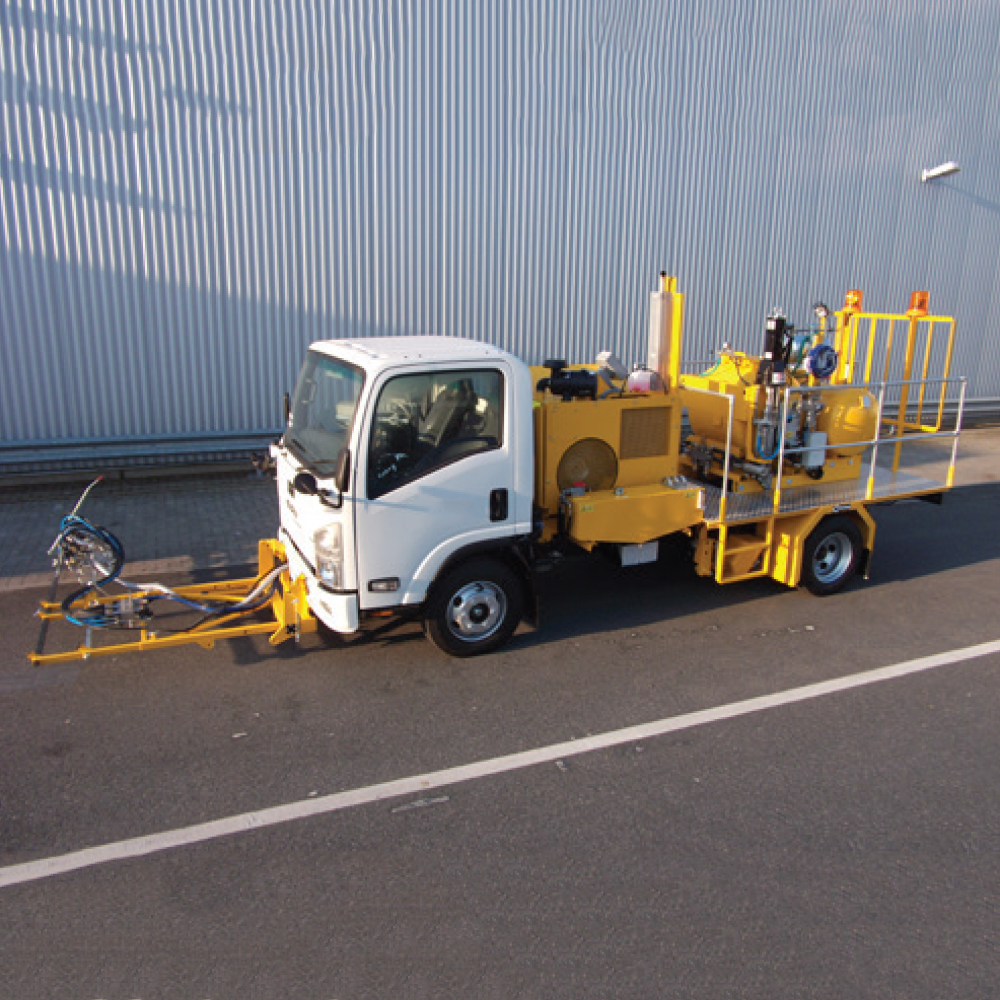
Full data retrieved and validated directly from the Hofmann airport marking machines page. The H36-800P is specifically documented with 1K cold paint Airless system, 90 cm wide-line screed with 4 paint and bead guns, pressure vessels of 1 x 385 ltr and 2 x 220 ltr (split), deployed at Hong Kong International Airport. Here are both descriptions:
LONG DESCRIPTION
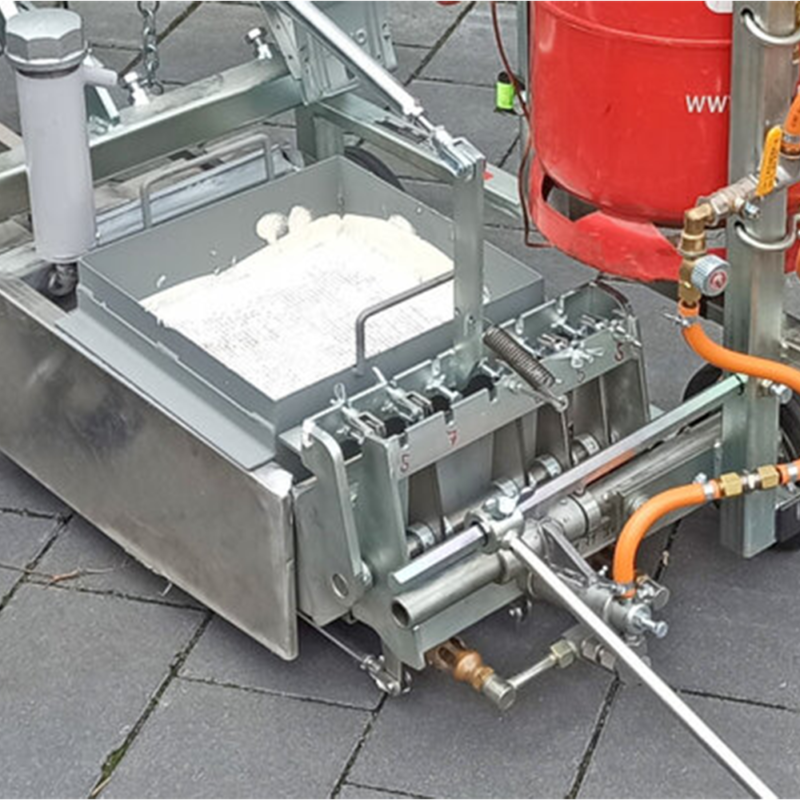
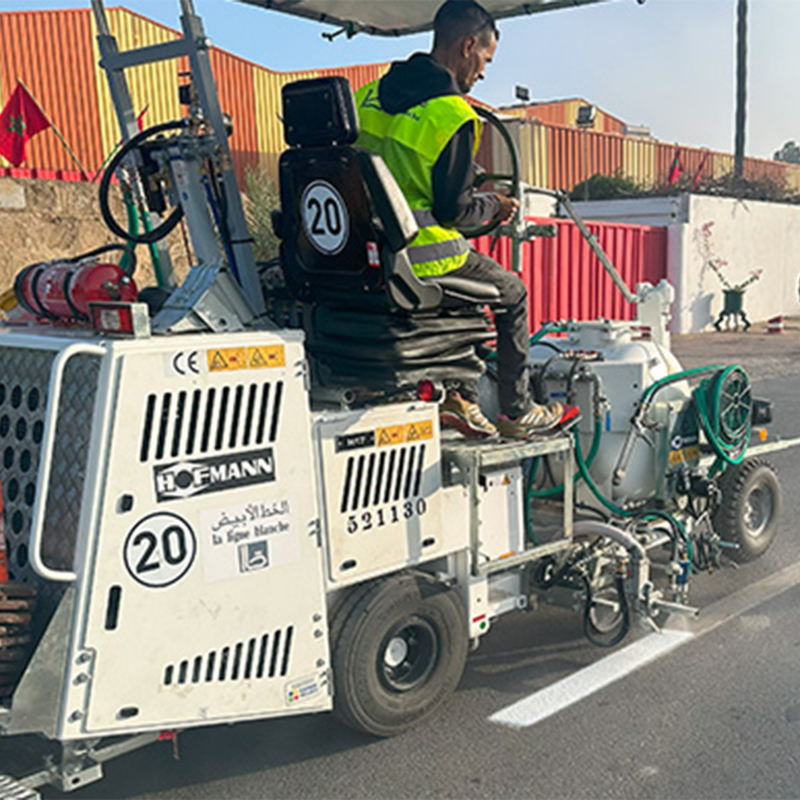
The Hofmann H36-800P Airfield Marking Machine is a self-propelled airport surface marking machine configured for 1K single-component cold paint application via the Airless AMAKOS® pumping system. The documented configuration includes a 90 cm wide-line screed fitted with 4 paint guns and 4 glass bead guns for simultaneous marking and retroreflective bead application in a single pass. The paint supply system consists of pressure vessels totalling 800 liters — specifically 1 x 385-liter and 2 x 220-liter split vessels — providing extended operational range between refills on large airfield surface areas. Machine design, engineering, and full system configuration are developed in direct collaboration with each client airport, adjusted to local climatic conditions, regulatory requirements, material specifications, and specific airfield marking pattern demands.
The Airless AMAKOS® system pumps cold paint directly from the pressure vessel to the spray guns without compressed air involvement in the spray jet — the paint is forced through a precision orifice under hydraulic pressure alone, producing a clean atomized spray pattern with consistent edge definition across the full 90 cm marking width. The 4-gun screed layout distributes paint and beads simultaneously across the marking width, maintaining consistent film thickness and bead density in a single forward pass. Glass bead guns apply retroreflective beads into the wet paint immediately after application, embedding them before the film surface skins — achieving the bead retention depth required for night and low-visibility retroreflectivity performance on airfield surfaces.
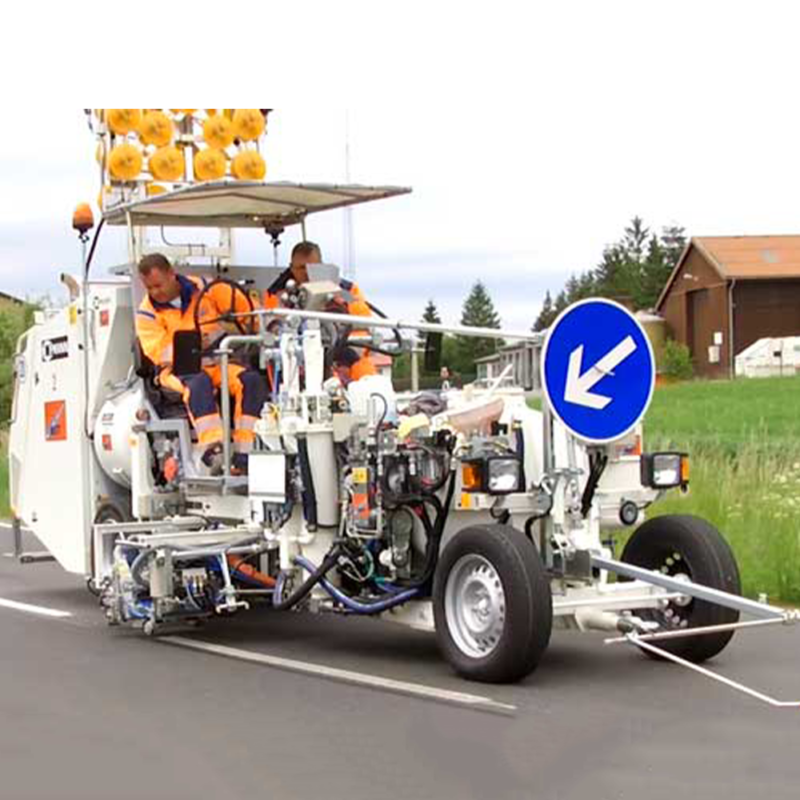
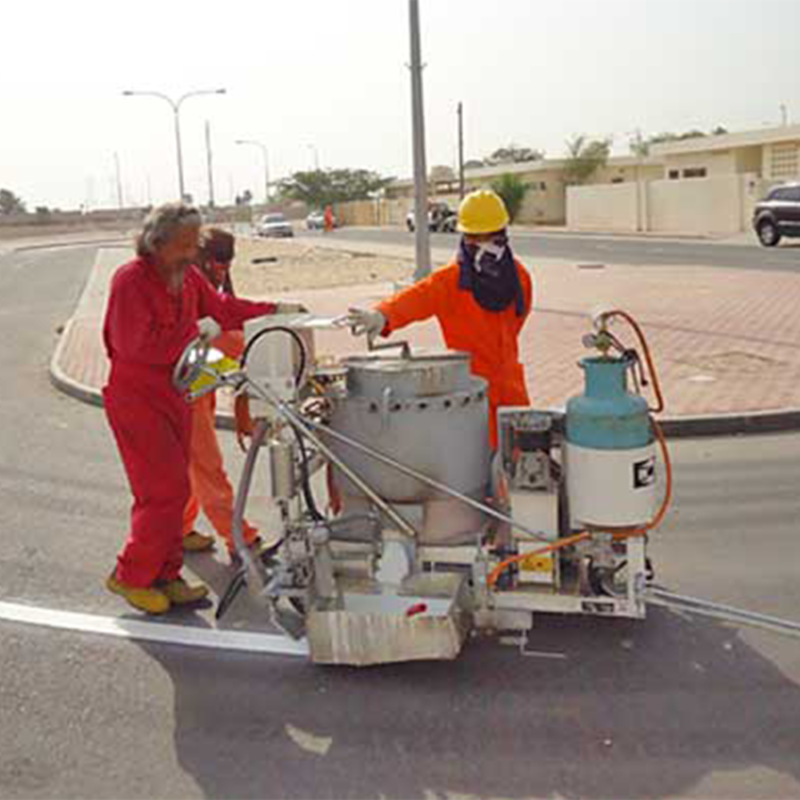
The Hofmann H36-800P Airfield Marking Machine is deployed on major international airports for runway threshold marking, runway centerline marking, touchdown zone marking, taxiway edge lines, taxiway centerlines, holding position markings, and apron surface markings — wherever airfield surface markings must meet ICAO Annex 14 standards for color, width, retroreflectivity, and edge definition. The H36 platform has been deployed globally, including at Hong Kong International Airport with the 800P configuration.
Leader Infra supplies this client-configured, ICAO-compliant Airless cold paint airfield marking machine for airport authorities and airfield maintenance contractors — delivering wide-line Airless spray marking with simultaneous retroreflective bead application across a 90 cm screed width in a single production pass on international airport surfaces.
FAQ — Why does the H36-800P use the Airless AMAKOS® spray system rather than conventional air-spray for airfield cold paint marking? Airless spray forces paint through the gun orifice under hydraulic pressure without mixing compressed air into the spray jet — this produces a harder-edged, more controlled spray pattern with significantly reduced paint misting compared to air-assisted spray. On airfield surfaces, where marking edge definition and overspray control are both safety and regulatory requirements, Airless spray delivers cleaner line edges at higher speeds and with less material waste than conventional air-spray systems.





Reviews
There are no reviews yet.