


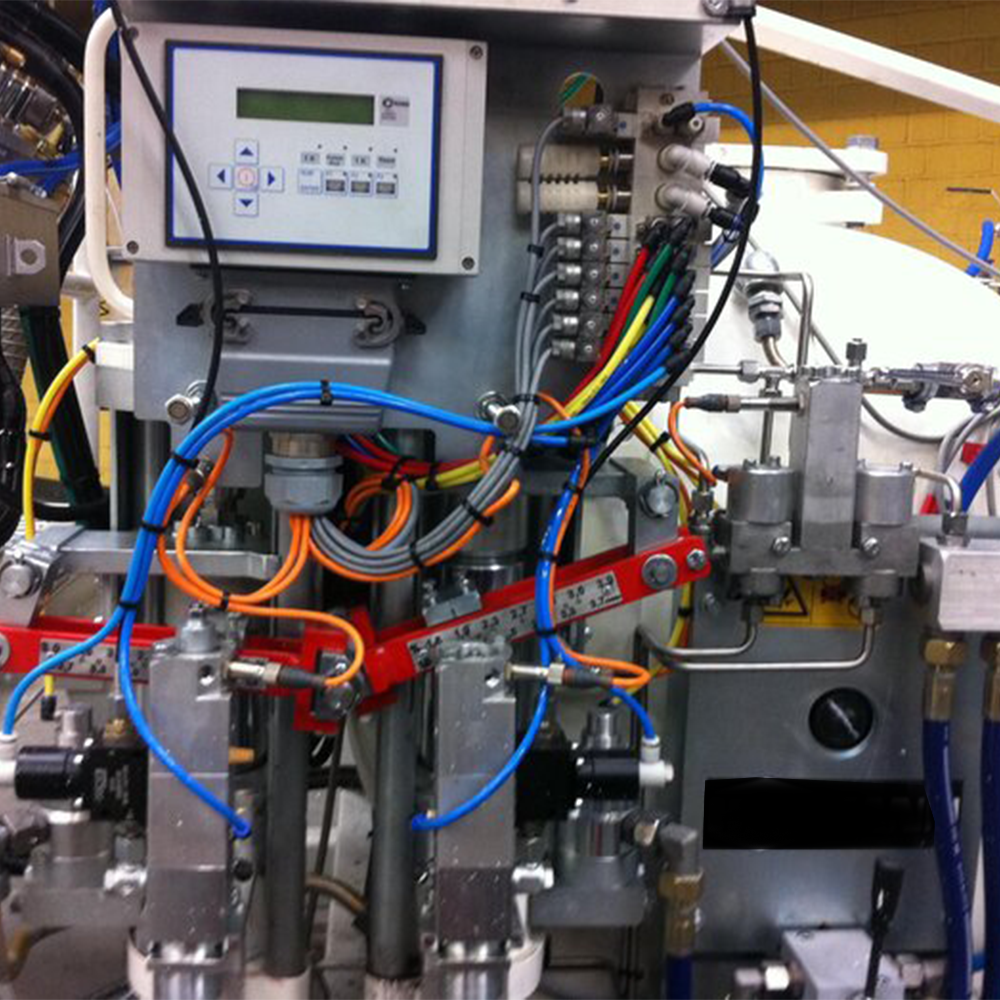

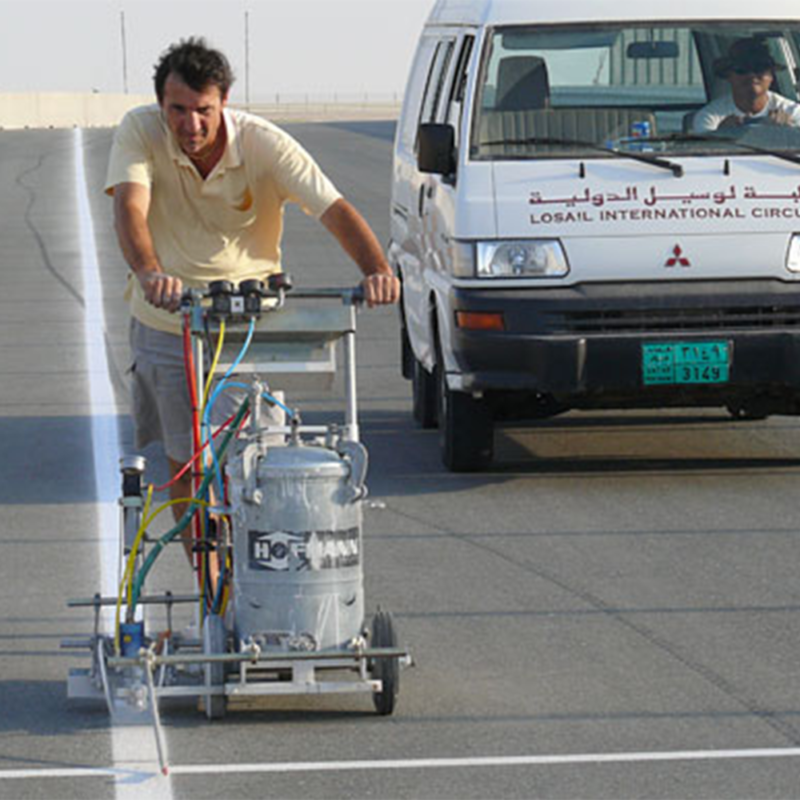
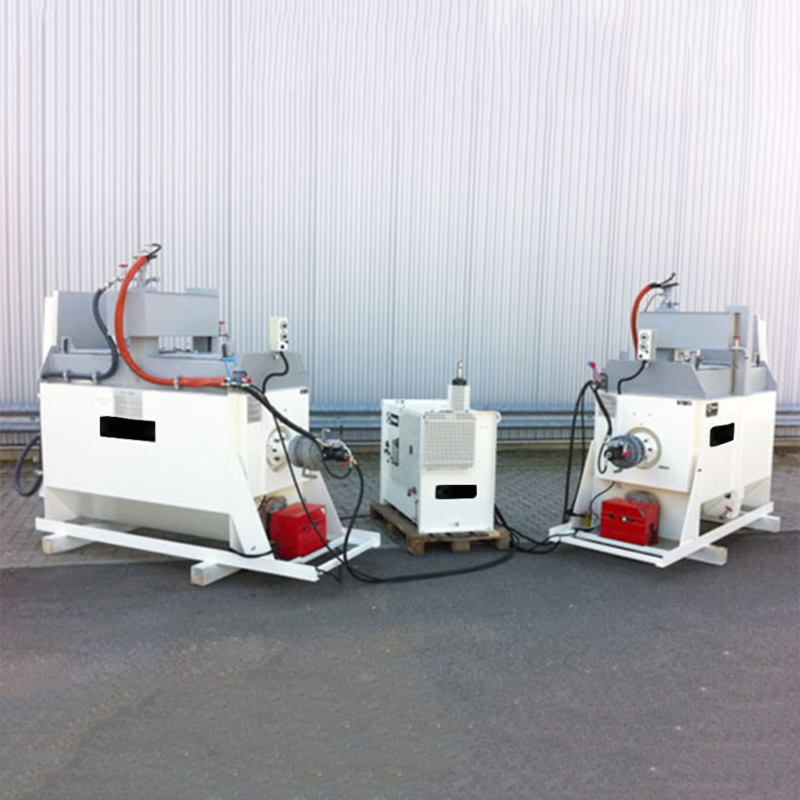
The Hofmann CONEX® Dosing Pump System is a continuous exact dosing pump system — the name CONEX® is derived from CONtinuous EXact dosing — designed for speed-proportional material volume delivery on self-propelled road marking machines. The system uses either plunger pumps or bellows pumps depending on the application material type. Plunger pumps carry no pistons hidden inside the pump cylinders — all seals are external and visually monitorable, with a pulling seal action rather than the pushing and pulling cycle of conventional piston pumps that subjects seals to high stress and accelerated wear. Bellows pumps contain no pistons or seals at all — the bellows diaphragm is the sole pumping element, making it a fully seal-free system. Both pump types are suitable for abrasive materials including glass-bead-mixed compounds and grip-additive-blended materials. Pump output rates cover: 12, 18, or 24 liters/min for 1K cold paint; approximately 35 liters/min for 2K cold plastic; 12, 18, or 24 liters/min for spray 2K cold plastic; and approximately 40 liters/min for spray thermoplastic.
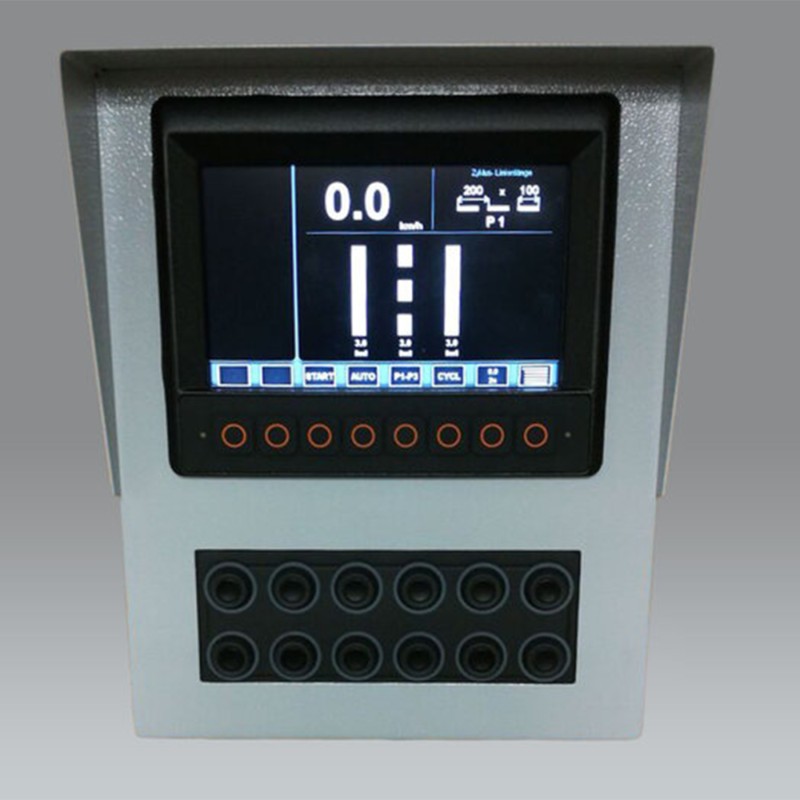
The operator enters the desired marking line width and layer thickness into the MALCON4/4E control unit. The required material volume per unit area is calculated automatically, and the corresponding pump output rate is transmitted to the pump via CAN-Bus in real time as the machine’s travel speed changes — the pump increases or decreases output to maintain the correct layer thickness regardless of speed variations during the marking pass. The pump feedback signal is recorded against GPS coordinates and logged ZTV-M compliant layer thickness documentation at each point along the route. No pulsation or material delivery losses occur in the system — consistent smooth material flow is maintained throughout the full marking run without the pulsation-induced layer thickness variations associated with conventional pressure vessel systems.
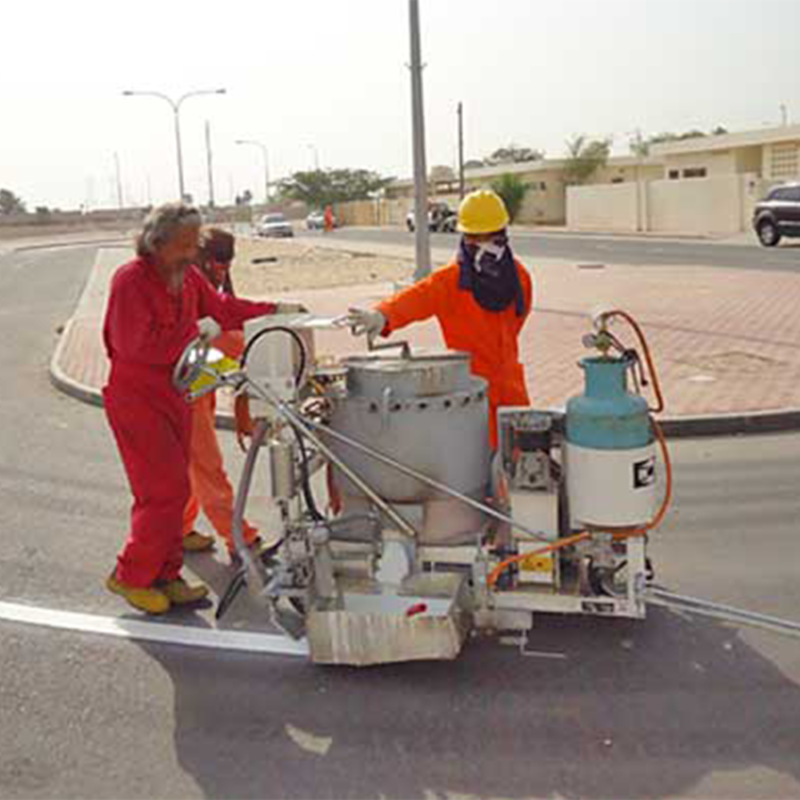
The Hofmann CONEX® Dosing Pump System is installed on self-propelled road marking machines for motorway, highway, airport, and urban road marking programs where ZTV-M layer thickness documentation, speed-proportional material delivery, and consistent film thickness across varying machine speeds are contractual quality requirements — particularly on regulated public road contracts and high-specification infrastructure projects.
Leader Infra supplies this CAN-Bus speed-proportional dosing pump system for road marking contractors — delivering continuous exact material dosing across 1K cold paint, 2K cold plastic, spray 2K cold plastic, and spray thermoplastic applications with GPS-logged ZTV-M layer thickness documentation in a single integrated system.
FAQ — What is the operational advantage of the CONEX® plunger pump’s pulling seal design over a conventional piston pump? A conventional piston pump pushes the piston into the material and then pulls it back — the return stroke subjects the seals to high compressive force against abrasive material, causing accelerated seal wear. The CONEX® plunger pump has all seals positioned externally on the plunger shaft, where they are loaded only in tension (pulling) rather than compression — dramatically reducing seal wear on abrasive materials like glass-bead-mixed paints and grip additives, and making seal condition visually monitorable without dismantling the pump.




Reviews
There are no reviews yet.